Since the early 2000s, China has established itself as one of Africa’s major economic partners. Chinese investments have multiplied in numerous countries, particularly in the infrastructure, energy, and transportation sectors. This growing presence has given rise to both hopes and debates.
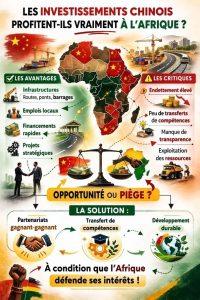
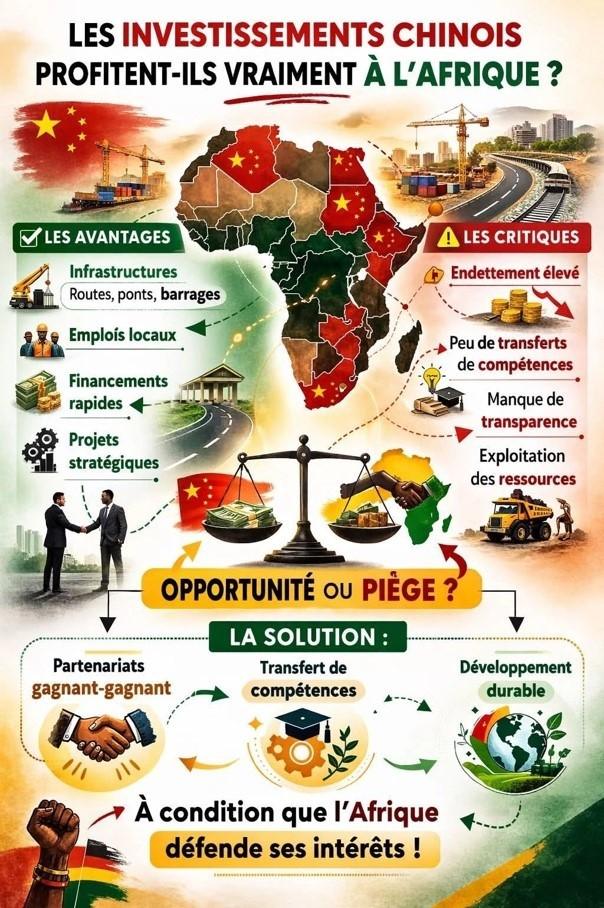
On the one hand, these investments have enabled the completion of numerous major infrastructure projects. Roads, bridges, dams, and railways have been built or modernized thanks to Chinese funding. These projects contribute to improving connectivity between regions, supporting economic activity, and accelerating the implementation of strategic projects. Furthermore, they can generate local jobs and offer African governments faster access to financing than that offered by some traditional partners.
However, this cooperation is also subject to criticism. Several observers point to the high level of debt owed by some African countries to China. Others highlight the limited transfer of skills to local workers, as well as contracts that are sometimes considered opaque. Finally, some fear that these investments primarily favor the exploitation of raw materials at the expense of genuine local economic transformation.
The crucial question, therefore, is not simply whether these investments benefit Africa, but rather how African countries can maximize their impact. By negotiating more balanced partnerships and directing investments toward sustainable development, African states can transform this cooperation into a genuine driver of growth. Chinese investments represent a real opportunity, provided that African interests are fully protected.