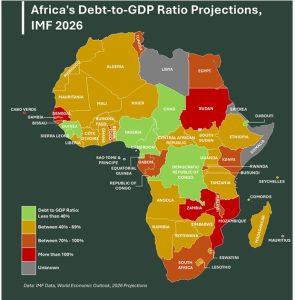
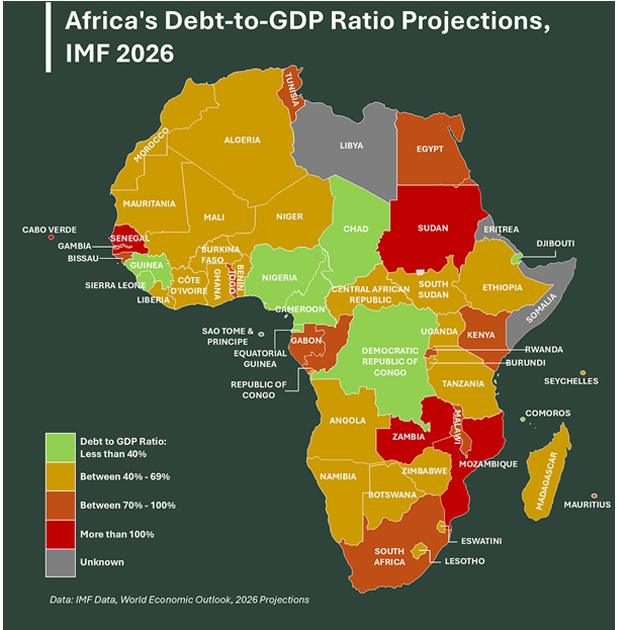
According to IMF projections for 2026, the issue of public debt in Africa can no longer be analyzed as a uniform phenomenon. While some countries remain in extremely worrying situations, debt trajectories across the continent now show a significant divergence.
Three countries remain in a critical zone, with debt-to-GDP ratios exceeding 100%: Sudan, Senegal, and Cabo Verde. These high debt levels pose major challenges to fiscal sustainability and repayment capacity.
At the same time, the overall trend across the continent shows a relative improvement. The African average debt-to-GDP ratio is projected to fall from 65.8% in 2024 to around 60.8% in 2026. This development is largely due to some successful debt restructurings. Ghana, for example, has reduced its debt-to-GDP ratio by approximately 14 percentage points, while Zimbabwe has seen an even more dramatic decrease of over 30 points.
However, the situation is deteriorating in several commodity-dependent economies. In Botswana, the fall in diamond revenues has led to a sharp increase in debt, rising from 29.9% to 44.8% of GDP. Algeria is also experiencing a significant increase in its debt, which has reached 62.2% of GDP amid an oil crisis.
Beyond the overall level of debt, the real challenge now lies in its cost. Debt servicing currently absorbs nearly 18.7% of public revenue in sub-Saharan Africa, almost three times more than in 2014, which significantly reduces budgetary margins for investment and development.