Africa is often mistakenly viewed as a homogenous market. Yet, this simplistic view is one of the most common errors made by companies seeking to expand there. The reality is quite different: the continent is characterized by a diversity of markets, each with its own economic, technological, and cultural specificities. Understanding this diversity is essential to any successful strategy in Africa.
The fintech sector perfectly illustrates this complexity. At least four main types of markets can be identified. Some countries, such as South Africa and Morocco, rely on systems dominated by traditional banks. Others, like Kenya and Tanzania, have developed ecosystems centered on mobile money, which has become essential in everyday life.
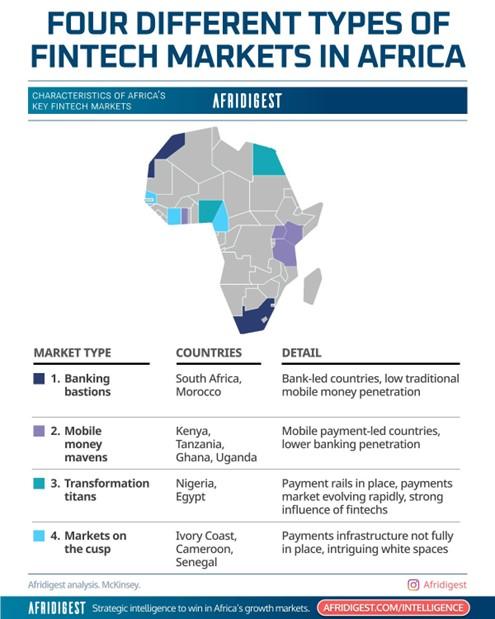
Furthermore, countries like Nigeria and Egypt are experiencing strong fintech innovation, leveraging existing infrastructure to offer new services. Conversely, markets such as Senegal and Ivory Coast are still in the structuring phase, with a focus on developing the foundations necessary for this transformation.
These differences demonstrate that a strategy that works in one country may fail in another. A model designed for Nigeria, for example, will not necessarily be relevant in Kenya or Tanzania, where practices and infrastructure differ significantly. This reality represents one of the main challenges to continent-wide expansion.
But this diversity isn’t limited to fintech. It’s also evident in other sectors like healthcare, retail, and services. Each market has its own dynamics, constraints, and opportunities. Ignoring these specificities is to underestimate the complexity of the continent.
Therefore, the key is not simply to adapt to African markets, but to understand them deeply. This means moving beyond a superficial approach focused on products or services to examine local dynamics: infrastructure, behaviors, regulations, and social norms. In other words, it’s not just about knowing “what to do,” but about understanding “why” things work the way they do.
Thus, succeeding in Africa requires a fundamental shift in perspective. We must stop viewing the continent as a uniform bloc and recognize it as a collection of distinct, interconnected, yet profoundly diverse markets. This understanding forms the basis of a sustainable strategy that respects local realities and is capable of creating long-term value.
