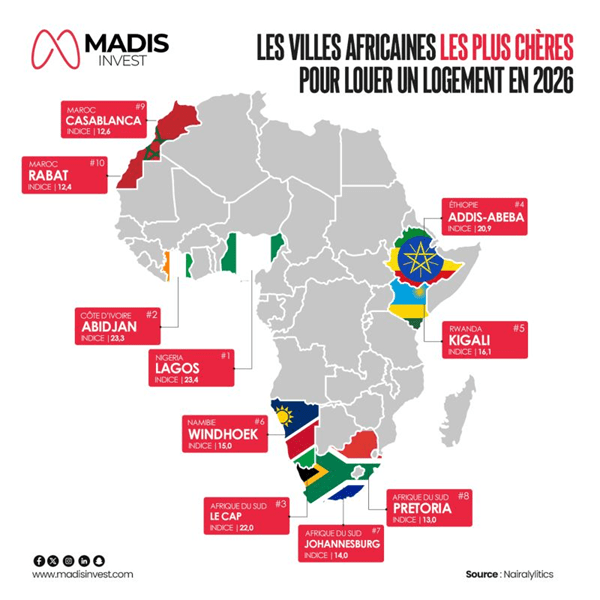
By 2026, renting accommodation in several major African capitals is becoming increasingly expensive. Cities like Lagos and Abidjan now top the rankings for rental prices, with indices of 23.4 and 23.3 respectively. They are followed by Cape Town (22.2) and Addis Ababa (20.9). This trend reflects the profound urban transformations currently taking place across the continent.
The rise in rents is primarily due to rapid urbanization. Every year, millions of Africans migrate to major cities in search of economic opportunities, jobs, and a better quality of life. This concentration of economic activity in a few metropolitan areas attracts ever-increasing numbers of people and puts growing pressure on the housing market.
However, the housing supply is failing to keep pace with this growing demand. In many cities, urban infrastructure and construction programs remain insufficient to absorb population growth. This situation contributes to soaring prices and exacerbates inequalities in access to housing.
Today, nearly 45% of Africans live in urban areas, a proportion expected to increase in the coming decades. In this context, the rental market becomes a key indicator of the continent’s economic dynamics, but also of the social tensions that can arise from them.
Faced with this situation, urban policies and investments in affordable housing appear as major challenges to support the growth of African cities while limiting the risks of social pressure.