At the dawn of the 21st century, Africa has established itself as a key player in the global geography of natural resources. The continent holds a significant share of the raw materials essential for the energy transition, advanced technologies, and the industries of the future. This reality gives it an increasing geopolitical role, provided it can transform this potential into a genuine lever of power.
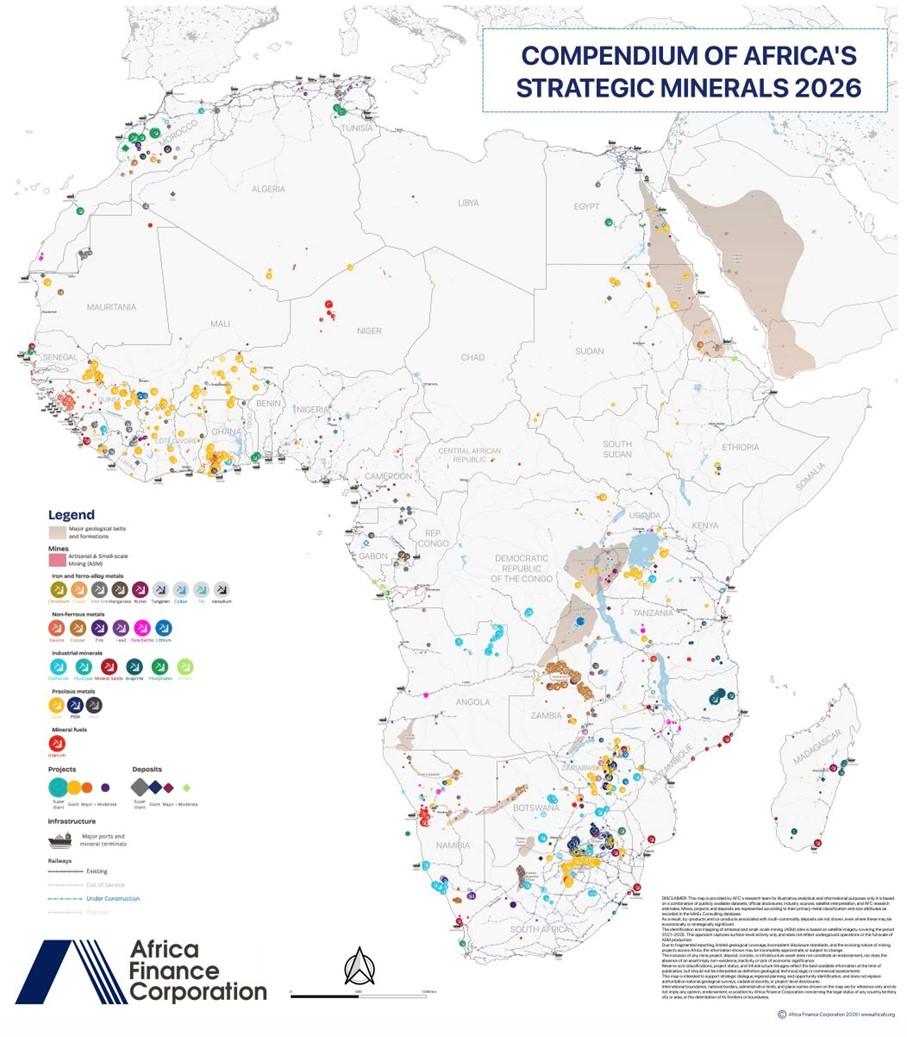
The distribution of resources across the continent illustrates this strategic importance. Central Africa holds significant reserves of copper and cobalt, essential for manufacturing batteries and electrical technologies. Southern Africa is distinguished by its wealth of platinum and manganese, vital for the automotive industry and steel production. In the Sahel region, uranium is a key resource for nuclear energy, while East Africa possesses rare earth elements, which have become crucial for digital technologies and electronic equipment.
This geological diversity places Africa at the heart of global supply chains. As demand for critical resources increases, particularly with the transition to low-carbon economies, the continent is becoming a strategic partner for many economic powers.
However, resource wealth alone is not enough to guarantee influence. The real challenge lies in the ability to develop the necessary infrastructure—transport, energy, industrial processing—to exploit and utilize these resources locally. It is in this combination of geology and infrastructure that the continent’s future geopolitical power will be determined.
Without suitable infrastructure, resources remain under-exploited or are exported with low added value. Conversely, an integrated strategy enabling local processing, industrial upgrading, and regional integration could reposition Africa as a major player, not only as a supplier of raw materials, but also as a center of production and innovation.
Thus, Africa is not merely rich in resources: it holds the keys to some of the most strategic challenges of the century. The question is no longer whether this potential exists, but how it will be used. Between extractive dependence and economic sovereignty, the choice will determine the continent’s place in the global balance of tomorrow.
