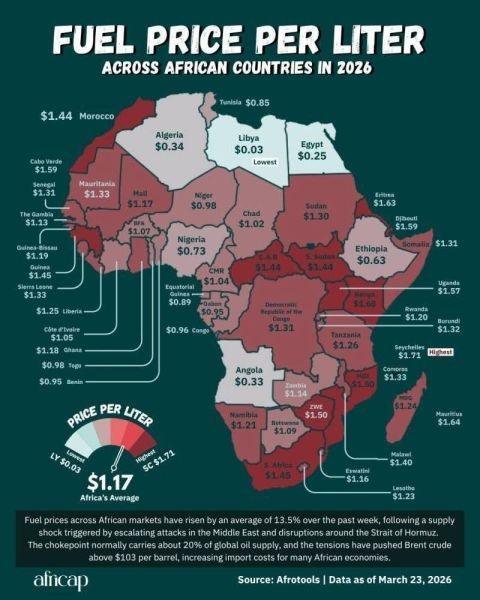
The recent surge in fuel prices in Africa, estimated at 13.5% in just one week, cannot be dismissed as a mere passing fluctuation. It is occurring within a tense geopolitical context, particularly in the Middle East, and highlights deep-seated structural weaknesses in African economies. Beyond the price increases themselves, this episode serves to reveal the continent’s energy vulnerabilities.
One of the key lessons from this situation is Africa’s heavy reliance on petroleum product imports. Despite the presence of producing countries, much of the continent continues to import refined fuel due to insufficient local refining capacity. This imbalance exposes African economies to fluctuations in international prices and disruptions in supply chains.
The price differences observed between African countries also reflect specific policy choices. Subsidy mechanisms, fiscal policies, and national strategies directly influence the cost of fuel for consumers. Some countries prioritize lower prices through subsidies, while others allow market forces to operate more freely, at the risk of greater volatility.
The case of Benin illustrates this intermediate situation. With a price of approximately $0.95 per liter, the country remains dependent on regional dynamics, particularly those of neighboring Nigeria, a major oil producer. This dependence underscores the interconnectedness of African energy markets and the need for a regional approach.
The consequences of this increase are numerous and immediate. The rise in fuel costs leads to inflationary pressure, increasing transportation costs and, consequently, the price of consumer goods. Household purchasing power is affected, while key sectors such as agriculture, transportation, and logistics experience increased strain.
However, beyond these negative impacts, this situation highlights strategic opportunities that are often underestimated. The transition to renewable energies appears to be not only an ecological solution, but above all an economic one. The development of solar and wind power could reduce dependence on fossil fuels and offer solutions tailored to local realities, particularly in transportation and rural areas.
Furthermore, oil-producing countries have a significant lever at their disposal: the development of local refining. Currently, exporting crude oil followed by importing refined products at high costs represents a substantial loss of value. Investing in refining capacity would allow them to capture more wealth and strengthen energy independence.
Finally, regional cooperation is essential. No African country can solve the challenges of energy dependence alone. Sharing infrastructure, establishing strategic partnerships, and coordinating energy policies can help stabilize supplies and reduce costs.
In conclusion, rising fuel prices in Africa are not merely a temporary shock, but a strategic signal. They underscore the urgent need to rethink the continent’s energy models. Shifting from a logic of dependence to one of control is a central challenge for strengthening economic resilience and building genuine African energy sovereignty.