
By 2026, housing costs in major African capitals are expected to rise significantly, revealing a rapid transformation of urban dynamics across the continent. Cities like Lagos (index 23.4) and Abidjan (23.3) are among the most strained markets, followed by Cape Town (22.2) and Addis Ababa (20.9). This phenomenon reflects a structural reality: urban growth far exceeds the capacity of housing markets to adapt.
This pressure is primarily due to rapid urbanization. Today, nearly 45% of the African population lives in urban areas, a figure that is constantly increasing. Large cities concentrate economic opportunities, jobs, and services, attracting millions of new residents each year. This internal migration creates a massive demand for housing, which the current supply struggles to meet.
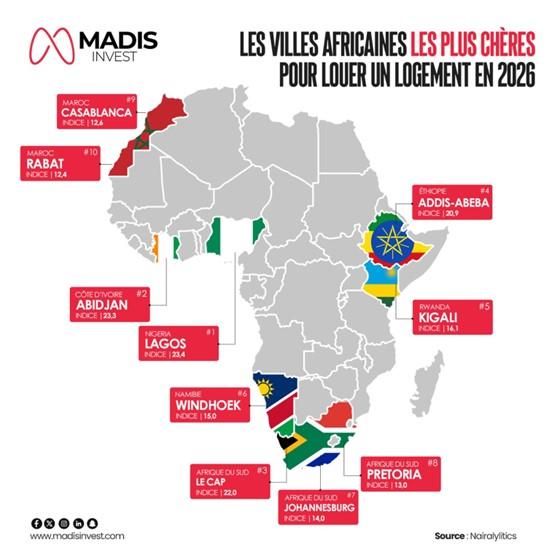
Meanwhile, real estate development is not keeping pace with this population growth. A lack of infrastructure, land constraints, high construction costs, and difficulties accessing financing limit the capacity to produce sufficient housing. The result: rising rents, particularly in major economic centers.
This situation makes the rental market a key indicator of the continent’s economic transformations. Rising rents often reflect strong economic attractiveness, but also a growing imbalance between supply and demand. This imbalance can generate social tensions, particularly for low-income populations, who are increasingly excluded from urban centers.
Beyond the housing issue, the entire question of urban planning arises. The challenge for African cities is now twofold: to support economic growth while guaranteeing equitable access to housing. This requires ambitious public policies, investments in affordable housing, and better regulation of the real estate market.
Thus, rising rents in major African capitals are not merely a real estate issue. They reflect the profound transformations of the continent, caught between economic dynamism and social pressures. Housing therefore becomes a strategic barometer, revealing both the potential for growth and the challenges to be met in building inclusive and sustainable cities.
