As global competition for energy and critical metals intensifies, Africa’s status is changing. Long perceived as a mere extractive periphery, it is now asserting itself as a central player in the global geoeconomic balance. Thanks to the diversity and importance of its resources, the continent occupies a strategic position at the heart of global supply chains.
In the north, countries like Algeria, Libya, and Egypt form a major energy hub, playing a key role in the energy security of Europe and, increasingly, Asia. In the west, the Gulf of Guinea—dominated by Nigeria and Angola—reinforces this centrality in terms of hydrocarbons. However, this dependence on energy flows also exposes these regions to significant risks, particularly those related to price volatility and maritime disruptions.
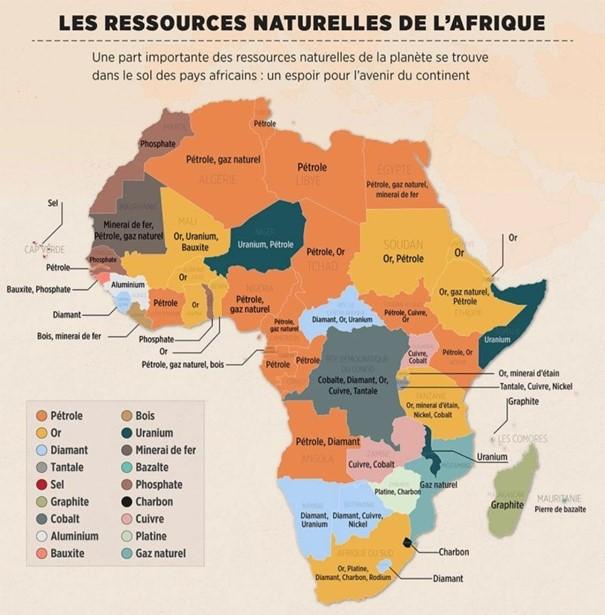
Further east and in the center of the continent, another strategic axis is emerging: the one linking the Democratic Republic of Congo, Zambia, and Tanzania. This area concentrates essential resources such as cobalt, copper, and tantalum, indispensable for the global energy transition and cutting-edge technologies. It thus constitutes one of the material foundations of the developing low-carbon economy.
In the south, South Africa and Namibia, along with Niger, are contributing to the continent’s integration into value chains related to nuclear energy and strategic metallurgy. These resources offer significant opportunities in the energy and industrial sectors of tomorrow.
Despite this exceptional wealth, a structural weakness persists: the limited capacity for local processing. The majority of resources are still exported in their raw state, limiting value capture and internal economic benefits. This extractive model hinders industrialization and keeps the continent in a dependent position within global supply chains.
Therefore, the real challenge for Africa no longer lies solely in controlling its resources, but in its ability to manage their transformation. The development of local industries, the establishment of efficient logistics corridors, and the strengthening of technological sovereignty have become strategic priorities.
The continent’s geopolitical future hinges on this transition. Shifting from a role as a supplier of raw materials to that of an integrated player in global value chains will enable Africa to transform its potential into sustainable power. More than just a resource-rich territory, it is now a pivotal player whose influence will continue to grow—provided it masters the levers of its own transformation.
