As global economic and geopolitical balances are being reshaped, Africa is emerging as a key player thanks to its exceptional wealth of natural resources. The continent holds a significant share of the critical minerals essential to modern industries, making it a central pillar of the technological and energy transformations of the 21st century.
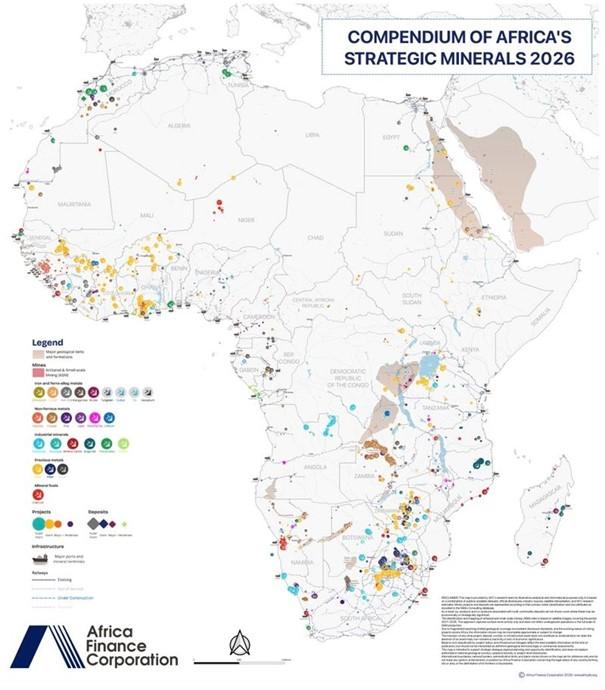
The distribution of these resources across the continent illustrates this strategic importance. Central Africa, particularly the Democratic Republic of Congo, holds vast reserves of copper and cobalt, essential for manufacturing batteries for electric vehicles and for digital technologies. In Southern Africa, countries like South Africa dominate the production of platinum and manganese, vital to the automotive industry and advanced energy systems. In the Sahel region, uranium is a key resource for nuclear power generation, while East Africa is gradually positioning itself as a major player in the exploitation of rare earth elements, essential for cutting-edge technologies.
However, simply possessing these resources is not enough to guarantee lasting influence. True power lies in the ability to exploit, transform, and integrate them into efficient value chains. This is where a second crucial factor comes into play: infrastructure. The combination of geological wealth and the development of modern infrastructure—ports, logistics corridors, energy networks—forms the basis of future economic and geopolitical power.
Without suitable infrastructure, resources remain underutilized or are captured by external actors. Conversely, efficient logistics networks not only enable effective exports but also promote local processing, thereby creating more value on the continent. In this context, infrastructure investments become as strategic as mining itself.
The challenge for Africa is therefore twofold. On the one hand, it is about securing and developing its natural resources in an increasingly competitive global environment. On the other hand, it is essential to develop industrial and logistical capacities capable of supporting a sustainable economic transformation. This evolution would allow the continent to move from the status of a supplier of raw materials to that of a key player in global value chains.
In a world where the energy transition, digitalization, and technological innovation are redefining the balance of power, Africa possesses a unique strategic advantage. Its natural resources, combined with targeted investments in infrastructure, can give it a decisive role in future geopolitical balances.
Africa’s geological wealth represents far more than a mere economic asset: it constitutes a lever of power for the future. How the continent transforms this wealth into sustainable value will determine its place in the 21st-century world order.