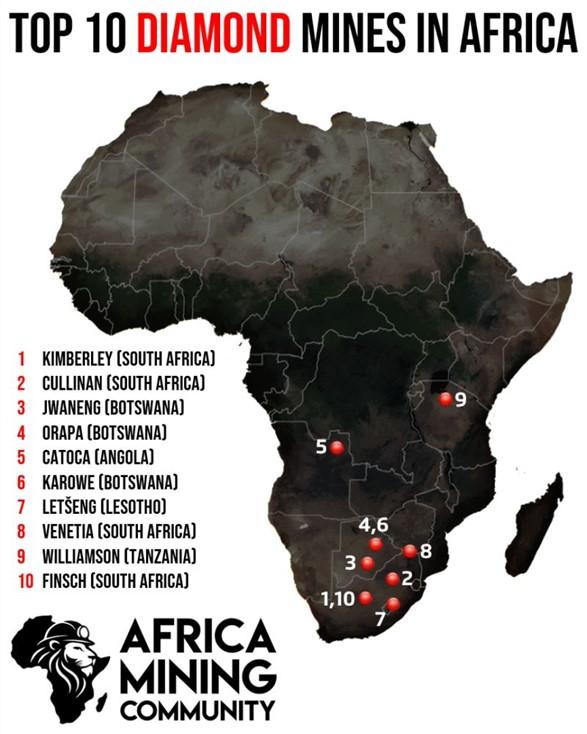
For over a century, Africa has held a central place in the global diamond industry. From the historic depths of Kimberley in South Africa to the rich deposits of Botswana, the continent remains the starting point for some of the world’s most precious stones. Beyond their economic value, these mines represent strategic assets that influence luxury markets, national economies, and the future of the mining sector.
Botswana has established itself as the undisputed leader in the diamond industry in Africa. With world-class mines such as Jwaneng, Orapa, and Karowe, the country has successfully transformed its natural resources into a driver of economic development. The Jwaneng mine, often considered the world’s most valuable, perfectly illustrates this success. Through strategic management and strong partnerships, Botswana has managed to capture a significant share of the value generated by its diamonds.
South Africa, the historical cradle of the modern diamond industry, also maintains a major position. Iconic sites such as Kimberley, Cullinan, Venetia, and Finsch have shaped the country’s economy and contributed to the discovery of some of the world’s most famous diamonds. Even today, these mines continue to play a significant role in global production.
Other African countries also contribute significantly to the overall supply. Angola and Tanzania, for example, are strengthening their presence on the international market thanks to promising deposits and increasing investment in the sector. Furthermore, the Letšeng mine in Lesotho stands out for producing some of the world’s most valuable diamonds in terms of value per carat, confirming the diversity and quality of African resources.
These mines are not simply extraction sites. They are at the heart of complex value chains, linking mining to the luxury goods industry. They also play a crucial role in national economies, generating revenue, jobs, and infrastructure investment. However, their impact largely depends on countries’ ability to manage these resources sustainably and maximize local benefits.
A growing challenge concerns the international demand for ethical and traceable diamonds. Consumers and markets are increasingly demanding guarantees regarding the origin of the stones and the conditions of their extraction. In this context, Africa has a strategic opportunity to strengthen its position by developing responsible and transparent practices.
In the future, the competitiveness of African mines will depend on several factors: technological innovation, governance, local processing, and integration into value chains. Countries that invest in these areas will be best positioned to dominate the market in the coming decades.
Ultimately, Africa remains the heart of the global diamond industry. Its mines are not only sources of wealth, but also drivers of economic and strategic transformation. In an evolving global environment, the challenge will be to transform this natural wealth into sustainable development and long-term economic influence.