In a Sahelian context marked by growing tensions and a realignment of international influences, Morocco is emerging as a unique and stabilizing actor. While several powers—notably Russia, Turkey, and China—are strengthening their presence in the region, Rabat distinguishes itself through a long-term strategy, developed well in advance of recent geopolitical upheavals, particularly the gradual withdrawal of certain Western powers.
This approach is based primarily on a structuring vision for regional development. One of the major challenges in the Sahel remains the landlocked nature of its countries, which hinders economic exchange and significantly increases trade costs. In some areas, transport costs can represent up to 40% of the value of imports, severely limiting the competitiveness of local economies. Faced with this reality, Morocco is proposing concrete solutions through large-scale projects.
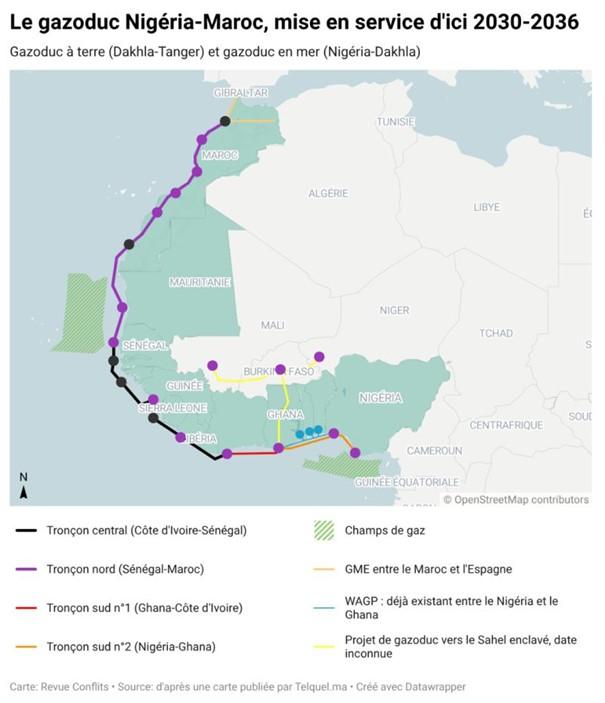
The Royal Initiative for Accessibility aims to connect Sahelian countries to the Atlantic coast, thereby opening up new trade opportunities. The Dakhla mega-port project is part of this strategy, offering a modern logistics infrastructure capable of facilitating trade between sub-Saharan Africa, Europe, and international markets. At the same time, the Africa-Atlantic Gas Pipeline, linking Nigeria to Morocco, represents a major strategic lever for strengthening the region’s energy and economic integration.
Beyond infrastructure, Morocco’s strategy also relies on a pragmatic economic presence, characterized by the absence of burdensome political conditionalities. This approach fosters balanced partnerships and strengthens trust with partner countries. It is complemented by other levers of influence, notably Morocco’s spiritual authority in certain Sahelian regions, as well as security cooperation networks that contribute to stability.
This combination of factors allows Morocco to adopt a unique position in a fragmented regional environment. Unlike other actors, Rabat manages to engage in dialogue with various blocs, notably the Alliance of Sahel States (ASS) and the Economic Community of West African States (ECOWAS), without aligning itself exclusively with one or the other. This capacity for mediation strengthens its role as a credible and respected actor.
In a rapidly changing Sahel, where geopolitical balances are shifting quickly, Morocco embodies an approach based on continuity, investment, and cooperation. Rather than simply responding to crises, it is pursuing a logic of structural transformation, aiming to correct long-standing imbalances and build solid foundations for sustainable development.
Morocco’s strategy in the Sahel exemplifies a new form of diplomacy, where infrastructure, economic development, and cultural ties combine to generate lasting influence. In an uncertain international context, this approach could position Morocco as a key player in the stabilization and integration of West Africa and the Sahel.