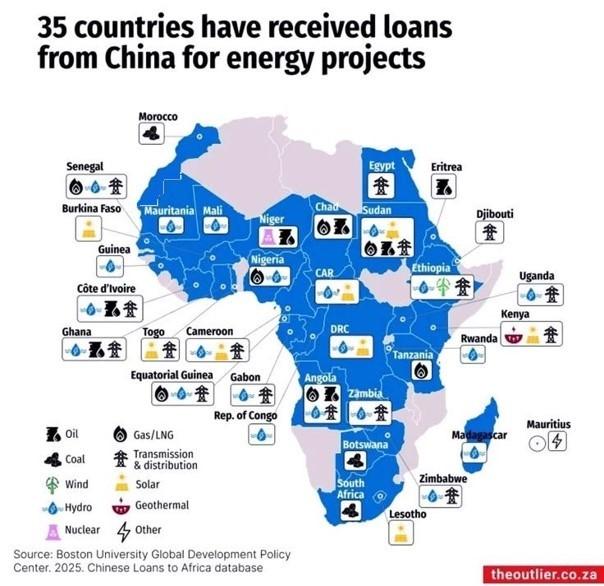
In recent years, China has established itself as a key player in energy development in Africa. Through an ambitious economic cooperation strategy, Beijing has provided loans to 35 African countries to finance large-scale energy projects. This dynamic, often referred to as “energy diplomacy,” reflects a long-term vision aimed at supporting the continent’s growth while strengthening Sino-African relations.
Chinese investments are primarily concentrated in three key sectors: hydropower, power grids, and oil infrastructure. Hydropower dams, for example, allow several countries to increase their renewable energy production capacity, thereby reducing their dependence on fossil fuels and improving access to electricity for millions of citizens. At the same time, the development of power grids helps stabilize often fragile national energy systems and support industrialization.
In the oil sector, China participates in the financing and modernization of extraction and transportation infrastructure, offering producing countries new opportunities to develop their natural resources. These projects, while strategic, also raise questions about the sustainable management of resources and economic dependence on external partners.
China’s involvement goes beyond mere financial support. It often includes the transfer of skills, technologies, and know-how, thereby contributing to the strengthening of local capacities. By promoting training and employment, these energy projects help to build a stronger and more diversified economic fabric.
However, this cooperation is not without its challenges. The use of loans raises questions about the debt burden of recipient countries and the long-term viability of certain projects. Furthermore, striking a balance between economic development, national sovereignty, and environmental protection remains a central issue in the implementation of these initiatives.
Despite these challenges, Chinese energy diplomacy appears to be a significant driver of transformation for Africa. By financing energy infrastructure today, Beijing is helping to shape the African economy of tomorrow. Access to reliable and affordable energy is indeed essential for attracting investment, developing industry, and improving living conditions for the population.
In a global context marked by the energy transition and climate challenges, Sino-African cooperation in the energy sector could play a decisive role. If accompanied by appropriate public policies and transparent governance, it has the potential to support sustainable and inclusive growth across the continent.