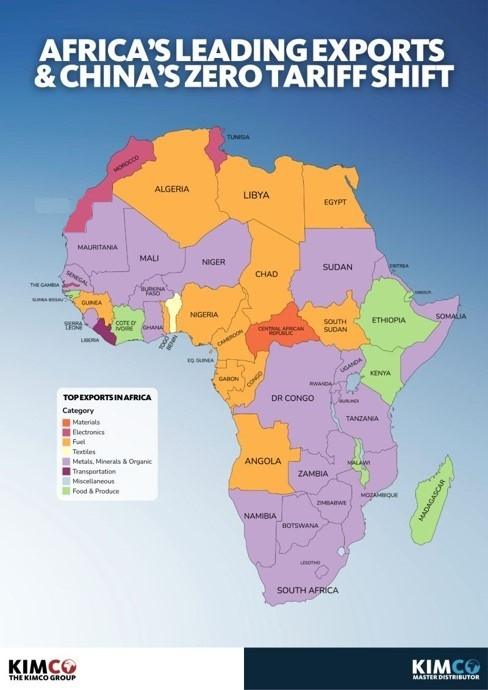
Starting May 1st, a major new chapter begins in economic relations between Africa and China. By establishing a zero-tariff regime for 53 African countries, China is offering the continent privileged access to one of the world’s largest consumer markets. This initiative, described as historic by several officials, marks a strategic turning point in Sino-African cooperation and paves the way for unprecedented opportunities for growth and economic transformation.
The immediate impact of this measure will be felt in key sectors of African exports. High-value resources such as copper, cobalt, cocoa, coffee, gold, and phosphates will benefit from easier access to the Chinese market. These products, which form the backbone of many African economies, can now be exported under more competitive conditions, thus increasing volumes, revenues, and added value. This development could significantly strengthen the position of certain African countries in global supply chains.
Beyond the export of raw materials, this policy also represents a powerful lever for the continent’s industrial development. By removing tariff barriers, China indirectly encourages investment in local processing and production activities. This could stimulate the creation of more integrated value chains, generate jobs, and facilitate the transfer of skills and technologies. Ultimately, Africa could move from being a mere supplier of raw materials to a competitive industrial player in several international markets.
This trade opening comes at a global time marked by increasingly protectionist policies in many regions. By choosing to facilitate access to its market, China is sending a strong signal in favor of multilateralism and South-South cooperation. This approach reflects a desire to build a model of shared growth, based on mutual interests and the strengthening of strategic partnerships between emerging economies.
The diversity of Africa’s economic assets is another key factor for success in this new context. Mineral resources dominate in Southern Africa, agriculture remains central in West Africa, while North Africa stands out for its industrial capacity and manufactured components. Thanks to duty-free access, each of these sectors will be able to develop further, attract new investors, and diversify its market opportunities.
Therefore, this initiative is not merely a trade measure. It represents a structural transformation in how African economies can integrate into global value chains. By facilitating trade, stimulating investment, and encouraging industrialization, it paves the way for a more connected, resilient, and prosperous economic future for the African continent.