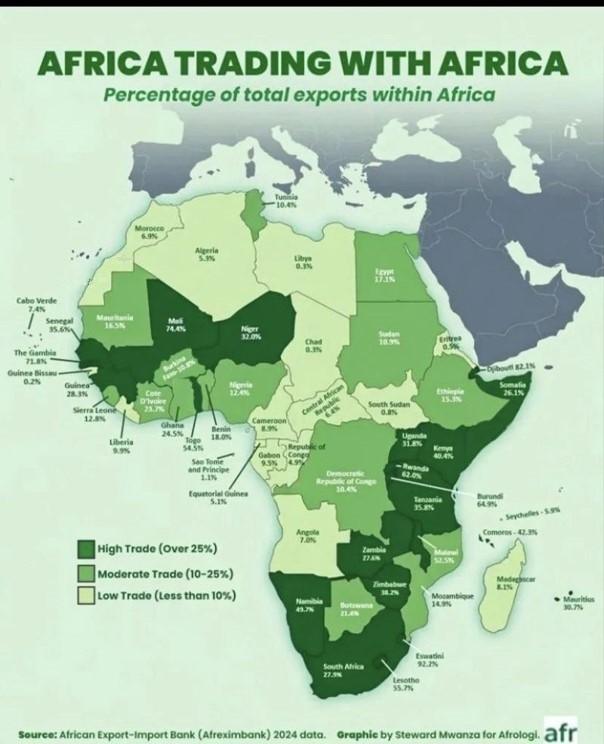
Despite its vast natural resources and economic dynamism, Africa remains largely outward-looking in terms of trade. Today, intra-African trade represents only about 16% of the continent’s total exports. This means that more than 80% of goods produced in Africa are destined for external markets. By comparison, Europe conducts nearly 60% of its trade internally, while Asia exceeds 50%. These disparities highlight a major challenge for African economic development: strengthening trade integration within the continent.
This situation is largely explained by the structure of African economies, which remain heavily dependent on the export of raw materials. Many countries export raw resources such as minerals, oil, and agricultural products, often at relatively low prices. These same products are then processed abroad before being re-imported as finished goods, sold at much higher prices. This model limits the creation of added value on the continent and hinders local industrial development.
However, some areas of the continent are showing encouraging signs of progress. Regional initiatives, trade corridors, and the implementation of the African Continental Free Trade Area (AfCFTA) are helping to improve trade between African countries. These efforts aim to reduce tariff and non-tariff barriers, harmonize regulations, and facilitate the movement of goods and services. Nevertheless, these advances are still insufficient to fundamentally transform the continent’s trade dynamics.
The real lever for change lies in industrialization and the local processing of resources. By investing more in manufacturing and adding value to raw materials, African countries could not only increase their intra-continental exports but also strengthen their competitiveness in international markets. Developing regional value chains would create jobs, stimulate innovation, and reduce dependence on imports.
Furthermore, more diversified and integrated local production would make many products more accessible to African populations. By limiting import costs and promoting short supply chains, prices could become more affordable, thus contributing to improved purchasing power and living conditions.
In conclusion, the low level of intra-African trade does not reflect a lack of potential, but rather a structural challenge that needs to be addressed. Africa has the resources, markets, and political will necessary to strengthen its economic integration. By focusing on local transformation, innovation, and regional cooperation, the continent can gradually build a more self-reliant, resilient, and needs-driven development model.