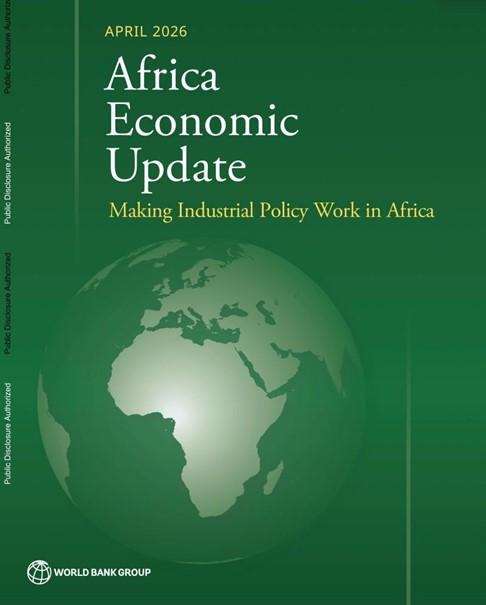
After a decade marked by successive global economic shocks, sub-Saharan Africa is showing signs of resilience, but also of slowing down. According to the latest edition of the World Bank’s Africa Economic Update, growth prospects for 2026 have been revised slightly downward, by 0.3 percentage points compared to previous estimates. Growth is now expected to remain around 4.1%, the same level as in 2025, but downside risks are multiplying, weakening the region’s economic trajectory.
This situation stems from a combination of external and internal factors. Internationally, geopolitical tensions, particularly the conflict in the Middle East, continue to fuel global economic uncertainty. Added to this are rising prices for essential goods such as fuel, food, and fertilizers, as well as tighter financial conditions. These factors contribute to increased inflationary pressure, which is projected to reach approximately 4.8% in 2026. This inflation disproportionately affects the most vulnerable households, for whom a significant portion of their income is spent on food and energy.
Meanwhile, internal structural constraints continue to weigh on the region’s ability to accelerate its growth. High levels of public debt and rising debt service costs severely limit states’ fiscal space. Indeed, the ratio of external public debt service to revenue has doubled in less than a decade, rising from 9% in 2017 to 18% in 2025. This situation reduces governments’ capacity to finance essential priorities, including infrastructure and public services.
Public capital investment, essential for supporting economic development, remains insufficient. It is still about 20 percent below its 2014 level, hindering the modernization of economies and job creation. This is compounded by a decrease in external financing, particularly development aid, which exacerbates the financial constraints faced by low-income countries.
Faced with these challenges, the short-term priorities are clear. Governments must direct their limited resources toward protecting the most vulnerable populations, while maintaining macroeconomic stability. Controlling inflation and prudent fiscal management are essential to navigating this period of uncertainty and paving the way for a stronger recovery.
In the medium and long term, the main challenge lies in transforming the growth model. With more than 620 million people expected to enter the labor market by 2050, sub-Saharan Africa must urgently create a large number of better-quality jobs. This requires more productive, more diversified growth, driven more by the private sector.
To achieve this, sustained investment in infrastructure, skills development, and institutional strengthening is essential. It is also crucial to reduce the costs associated with economic activity in order to attract more private investment and stimulate entrepreneurship.
Ultimately, sub-Saharan Africa is at a pivotal moment. While growth is holding up, it remains fragile in the face of multiple risks. Countries’ ability to meet these challenges will determine not only the strength of their economic recovery, but also their capacity to transform their demographic potential into an engine of sustainable development.