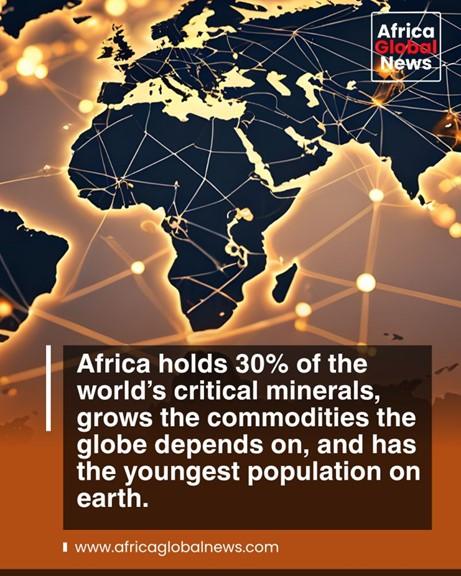
Africa has all the assets to establish itself as a global economic powerhouse. It holds approximately 30% of the world’s critical minerals, produces essential agricultural resources such as cocoa and cotton, and has the youngest population in the world, with over 1.4 billion inhabitants and a median age of around 19. Yet, despite this wealth, the continent still accounts for less than 3% of global GDP. This contrast highlights a fundamental problem: it is not the lack of resources that limits African development, but rather the way in which they are exploited and utilized.
The heart of the challenge lies in the value chain. Today, Africa exports most of its raw materials in their unprocessed state and imports processed products at significantly higher prices. Cocoa, for example, leaves Côte d’Ivoire at around $2 per kilogram only to return as chocolate sold for $20. Similarly, rare earth elements, cotton, and hydrocarbons are processed elsewhere before being reintroduced into African markets. This economic model does not constitute a truly balanced exchange, but rather a transfer of value outward.
To reverse this trend, several structural transformations are necessary. The first concerns the appropriation of value chains. The development of local processing, manufacturing, and distribution industries is essential to capturing a larger share of the wealth produced. Initiatives such as the requirement for local processing in certain mining projects, like the Mrima Hill project in Kenya, show the way forward.
Strengthening intra-African trade is a second essential lever. Currently, only 15% of the continent’s trade is between African countries, a level far below that of Europe or Asia. The effective implementation of the African Continental Free Trade Area (AfCFTA) could transform this situation by facilitating the movement of goods and stimulating regional production. However, beyond the agreements themselves, the challenge lies in their concrete and rapid implementation.
Another key factor is the development of local capital. Financing for African development remains largely dependent on external resources, often with stringent conditions attached. Strengthening domestic financial markets and creating African investment vehicles would support projects tailored to local realities and reduce this dependence.
The narrative also plays a strategic role. Africa’s image is still too often shaped by external perceptions, centered on risk or aid. This framing influences the decisions of investors and policymakers. Regaining control of the economic narrative is therefore a major challenge in order to highlight the continent’s real opportunities.
Finally, better coordination among African countries is needed. Competition between states to attract investment, often by offering very favorable conditions to external actors, limits the benefits for the continent. A more concerted approach, particularly in the management of strategic resources, would strengthen Africa’s negotiating power on the global stage.
Africa doesn’t need permission to become a global power. It already possesses the necessary resources, human capital, and potential. What remains to be built are the systems, institutions, and collective will to transform these assets into sustainable wealth. Change is already underway, but its success will depend on the continent’s ability to accelerate this transformation and act in a coordinated manner.